Idle Nightclub Tycoon
- 4.6
- Rating
- 5.00M
- Installs
- Free
- Price

 Analysis by App-foxy
I found Idle Nightclub Tycoon easy to understand within minutes: build up a nightclub, improve it, attract better-known guests, and let the business continue earning while I am away. That simple loop is exactly why the game is approachable, but it also creates the central question for me: does it remain interesting once the first burst of upgrades is over?
My answer is cautiously positive. This is a relaxed simulation game for players who enjoy watching a small operation become more profitable without needing constant attention. It is free to start, rated for Everyone, and made by Iteration One GmbH. The store summary describes the basic appeal well, but the real experience depends on how you feel about repeating short management decisions, returning for progress, and accepting that the most satisfying improvements often arrive gradually rather than all at once.
From a small club to a routine worth returning to
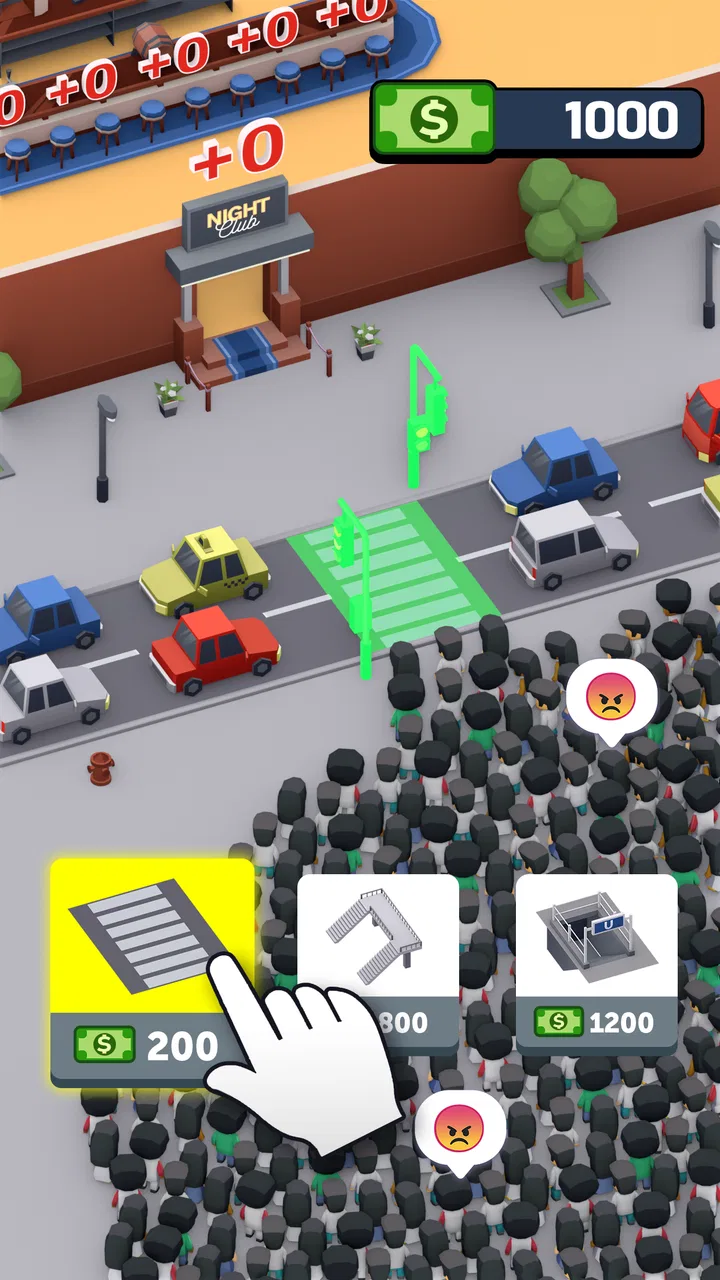
The opening hours are the strongest part of the experience. I always have a clear reason to tap: an upgrade is available, a new improvement can increase earnings, or the club needs another step before it feels more successful. The interface keeps the main idea visible, so I do not need to study a complicated manual before making progress.
You May Also Like

 Blood Strike: 2.5 Anniversary
Blood Strike’s Loadouts Turn Every Drop Into a Tactical Gamble
A close look at Blood Strike’s custom loadouts: how fast access to signature weapons reshapes its battle royale rhythm, rewards preparation, and narrows the gap between fights.

 Pandora - Music & Podcasts
Pandora’s Music Is Easy to Start, but Harder to Recover
Pandora’s strength is its low-effort path from a seed to a station. Its weak spot is how much confidence it asks you to place in connection, setup, and quiet recovery.

 8 Ball Pool
 Is Built on Rivalries, Rematches, and Routine
A close look at the rivalries, rematches, shared routines, and unanswered safety questions that turn a quick pool match into a persistent mobile community.

 Samsung Music
’s Quiet Strength Is Playing What You Already Own
Its reach comes less from spectacle than from dependable access to a personal library. That simplicity is both the app’s strongest retention engine and its ceiling.

 AccuWeather: Weather Radar
AccuWeather Review: A Quick, Clear Forecast for Everyday Decisions
For everyday plans, the best forecast is the one you can understand quickly. AccuWeather makes rain timing, radar, and local conditions easy to act on, with a few trade-offs.

 Hill Climb Racing
Why Hill Climb Racing Still Turns Crashes Into One More Run
A tiny car, a bumpy hill and one more upgrade: Hill Climb Racing keeps resurfacing because its simple chaos makes every near-miss feel personal.
More From Our News Desk



That accessibility makes it a good fit for short sessions. I can check the club while waiting for a coffee, make a couple of decisions, and close the game without feeling that I have abandoned a demanding campaign. The idle structure also means that returning after a break still feels useful. The club continues to represent progress rather than becoming a task that requires uninterrupted attention.
The first-week appeal comes from the rhythm of visible improvement. Early upgrades feel meaningful because the nightclub is still developing, and each change helps me imagine the next stage. I am not simply collecting a number; I am trying to turn a modest venue into a more attractive and profitable business. That light management fantasy gives the game more personality than a completely abstract idle counter.
At the same time, the game does not ask me to be a serious business analyst. I do not need to calculate complicated budgets or plan a detailed staffing schedule. The decisions are intentionally digestible. For someone who wants a simulation with a nightclub theme but not a full management spreadsheet, that balance works well.
What makes the first sessions satisfying
The most useful early habit is to avoid spending every reward immediately just because an upgrade button is available. I get more from comparing the effect of different improvements and deciding whether I want faster short-term progress or a stronger return when I come back later. That small pause turns the game from random tapping into a basic prioritization exercise.
I also recommend treating offline earnings as part of a routine instead of checking constantly. The game is more comfortable when I let progress accumulate between normal activities. Opening it repeatedly just to collect small amounts can make the loop feel narrower than it really is. A morning check and an evening check are more satisfying for me than trying to force attention into every spare minute.
Another useful approach is to set a personal target for each session. I might decide to save for one important improvement rather than scattering currency across several minor actions. This gives a short visit a clear ending and helps prevent the feeling that I have made progress without actually changing the club.
The game’s broad appeal is reflected in its audience. It has an average rating of 4.6 from around 59 thousand ratings, and it has passed 5 million installs. Those figures do not guarantee that every player will enjoy the loop, but they do match my impression that the concept is easy to pick up and broadly accessible.
Where the simulation feels lighter than expected
Players coming from deeper tycoon games should adjust their expectations. The nightclub setting suggests a world of entertainment logistics, guest preferences, staffing problems, and difficult financial choices, but this is primarily an idle progression game. Its pleasure comes from upgrades and accumulation, not from simulating every part of running a real venue.
That lighter approach is helpful on a phone, especially when I want something low pressure. It is less satisfying if I am looking for a game where every decision can rescue or ruin the business. Here, mistakes usually feel manageable, and the main challenge is deciding how patiently to progress rather than surviving a complex crisis.
This is also why it compares differently with traditional business simulators. A detailed tycoon game offers more control and more room for creative planning, while this one offers quicker feedback and much less mental overhead. Compared with a purely passive idle game, the nightclub theme gives my choices a clearer context. The trade-off is that the strategic layer is thinner.
Does it keep earning a place on the phone?
I find its staying power depends on whether the small choices still feel purposeful after the opening rush. A simple habit—deciding what I want the next visit to accomplish before closing the game—can keep a check-in from becoming mere collection. With that routine in mind, I can judge whether the game’s ongoing appeal is worth the space it takes up.
The month-to-month question
After the novelty fades, the game depends on whether I enjoy maintenance as a form of play. The central loop remains appealing when I like checking progress, choosing the next improvement, and watching the club become more valuable over time. It becomes less compelling when upgrades start to feel like steps on a predetermined staircase rather than decisions with noticeably different consequences.
For me, the long-term value is strongest when I play in small, deliberate visits. I can use it as a background game alongside a busy schedule, not as something that demands a full evening. The offline element supports that pattern particularly well because progress does not depend entirely on being present at the exact right moment.
The important distinction is between convenient progress and meaningful progress. Returning to collect accumulated earnings is convenient. Returning because I have a plan for the club is meaningful. If I only collect and immediately buy whatever is highlighted, the game can become mechanical. If I save toward a goal and think about the order of improvements, the same system feels more engaging.
I would not recommend using it as a replacement for a more involved strategy game. Its value is recurring rather than dramatic. It gives me a reason to return, but it does not necessarily give me a new story, a major tactical puzzle, or a fresh mechanical challenge every time I open it. That makes it dependable for casual play, though not ideal for players who need constant surprise.
How I would fit it into everyday life
A realistic use case is a player who wants a low-commitment game during a commute or between household tasks. I can open the club, review what has accumulated, choose one upgrade, and leave. Later, I can return with enough progress to make another decision. The session has a beginning and an end, which helps prevent the game from taking over the day.
It also suits someone who enjoys watching a project grow over several weeks. The appeal is similar to tending a small digital business: the pleasure comes from returning to something that has continued moving forward. That makes it a better companion for patient players than for people who want immediate mastery.
On the other hand, I would skip it if I dislike timers, repeated upgrade choices, or the feeling of waiting for the next financial step. I would also choose a deeper simulation if I wanted to control detailed venue operations. The nightclub theme cannot, by itself, make a light idle loop feel like a full management sandbox.
Where the maintenance burden appears
The game is not demanding in the usual sense, but it still asks for a small habit. If I stop returning, the club’s progress becomes something I am merely postponing rather than actively enjoying. That is not a serious flaw, yet it matters when deciding whether the game deserves permanent space on a crowded phone.
My preferred routine is to check in when I naturally have a few minutes, make one or two considered purchases, and close the game. I find that more sustainable than chasing every possible collection opportunity. The idle design should reduce pressure, and it does when I let it work in the background of my schedule instead of turning it into another obligation.
There is also a psychological maintenance cost: I need to remember what I was saving for. Without a clear next objective, the upgrade loop can blur together. Writing down a simple personal goal is unnecessary for most players, but even mentally choosing “the next major improvement” makes the return session more focused.
The current version is 1.80.000, and the game runs on Android 8.0 or later. For someone deciding whether to install it, that means the practical question is less about learning the controls and more about whether the idle nightclub format fits the way they use their phone. The game is free, but optional in-app purchases range from $0.99 to $99.99 per item, so I would approach spending carefully and decide in advance whether I want the free progression to remain my normal pace.
What can cause fatigue
The largest source of fatigue is repetition. The first upgrades feel like a transformation because the club is new. Later, the emotional impact can soften when the main activity is still collecting, upgrading, and waiting for the next threshold. That is normal for the genre, but the nightclub theme may raise expectations that the game will keep introducing richer social or operational situations.
Another possible frustration is the tension between patience and acceleration. Idle games are built around waiting, while optional purchases can make faster progress tempting. I prefer to decide whether I am enjoying the process before spending anything. If the only satisfying moment becomes reaching the next upgrade quickly, the free structure can start to feel less rewarding.
There is a useful trade-off here. The slower pace makes the game easy to live with and prevents it from demanding constant concentration. The same pace can feel underpowered when I am in the mood for a challenge. I would not call that a defect so much as the boundary of what this particular design is trying to be.
I also notice that the game is better at supporting a routine than creating a strong long-term narrative. I remember the growth of the club in broad terms, but I am not playing to discover a carefully unfolding story. Players who need characters, plot twists, or a campaign finale should look elsewhere. Players who enjoy incremental ownership may find that the absence of heavy narrative keeps the experience pleasantly simple.
Who should install it, and who should pass
I think it is a good choice for casual simulation fans, idle-game players, and anyone who likes turning a small virtual business into a more impressive one over time. It is especially suitable for people who want short sessions and do not mind leaving the game alone between visits. The Everyone rating also makes its presentation broadly approachable.
I would recommend passing if you want a realistic nightclub simulator, a competitive multiplayer experience, or a game built around difficult failure. This is not where I would go for detailed financial modeling or constant tactical variety. A conventional tycoon game is a better alternative for deep control; a fast action game is better when I want immediate excitement; and a story-driven title is a better fit when progression needs emotional context.
The developer, Iteration One GmbH, has positioned the experience around a clear and familiar idle structure rather than an intimidating management system. That clarity is one of its strengths. I never feel lost, but I also need to accept that the game’s simplicity is deliberate and will not suddenly become a complex business simulator just because the club grows.
My long-term verdict
I would keep Idle Nightclub Tycoon installed if I wanted a calm progress game that I could visit a few times during the day without committing to long sessions. Its strongest quality is not endless novelty; it is the comfortable sense that the club is moving forward while I am doing other things.
Its lasting value depends on expectations. If I judge it as a compact idle simulation, it delivers an accessible loop with a clear theme, approachable decisions, and a useful offline rhythm. If I judge it as a full nightclub management game, it feels too light and too repetitive to satisfy for long.
The free entry point makes trying it straightforward, while the optional purchase range means I would keep a firm boundary around spending. I would first play at the natural pace, decide whether the routine still feels pleasant after the opening excitement, and only then consider whether faster progress is worth paying for.
My final recommendation is therefore selective but genuine: install it if you like gradual upgrades, short check-ins, and the quiet satisfaction of returning to a business that has grown in your absence. Skip it if waiting and repeating the same basic management rhythm quickly frustrate you. For the right player, the nightclub earns lasting space not through constant surprises, but through being an easy, low-pressure habit that remains enjoyable when played on its own terms.
FAQs for Idle Nightclub Tycoon
01What is Idle Nightclub Tycoon?
Idle Nightclub Tycoon is a casual management game in which you build, expand, and automate your own nightclub empire. You begin with a small venue and gradually unlock dance floors, bars, VIP areas, staff, and entertainment upgrades. The idle system allows your club to keep generating income while you are away, making it suitable for short play sessions as well as longer management sessions.
02How does the idle progression system work?
The game continues to produce revenue through automated club operations, even when you are not actively playing. When you return, you can collect accumulated earnings and invest them in upgrades, new facilities, better staff, and improved customer services. Progress is generally based on reinvesting profits efficiently, although the speed of advancement may depend on watching optional advertisements or using premium resources.
03Does Idle Nightclub Tycoon require an internet connection?
An internet connection may not be necessary for every basic feature, particularly when managing your club or collecting standard offline earnings. However, online access is commonly required for advertisements, cloud-related features, special events, updates, and in-app purchase verification. If you plan to play completely offline, some rewards or promotional features may be unavailable, so checking the current store description is recommended.
04Is Idle Nightclub Tycoon free to play?
Idle Nightclub Tycoon can generally be downloaded and played for free, but it may include optional in-app purchases and rewarded advertisements. These extras can provide additional cash, boosts, faster construction, or other conveniences. You can make progress without spending money, although advancement may feel slower at later stages. Parents should also review purchase settings if children use the device.
05Is Idle Nightclub Tycoon suitable for all players?
The game is designed for players who enjoy relaxed tycoon, idle, and incremental management mechanics rather than complex strategy or realistic nightclub simulation. Its themes focus on entertainment venues, customers, upgrades, and business growth. Because age ratings, advertising content, and purchase options can vary by platform and region, it is best to review the current Android or iOS listing before downloading, especially for younger players.
Pros
- Simple idle mechanics make it easy to progress with little active play.
- Multiple nightclub areas and upgrades provide a clear sense of expansion.
- Short play sessions fit well into quick breaks or casual gaming.
- Staff and venue improvements add satisfying management decisions.
- Bright visuals and upbeat music suit the nightclub theme.
Cons
- Progress can slow considerably when upgrade costs increase.
- Frequent ads may be needed to claim bonuses or speed up earnings.
- Management options feel limited compared with deeper tycoon games.
- Offline earnings may be capped
- reducing rewards after long absences.
- Late-game objectives can become repetitive once venues are fully upgraded.

Idle Nightclub Tycoon
Gallery